

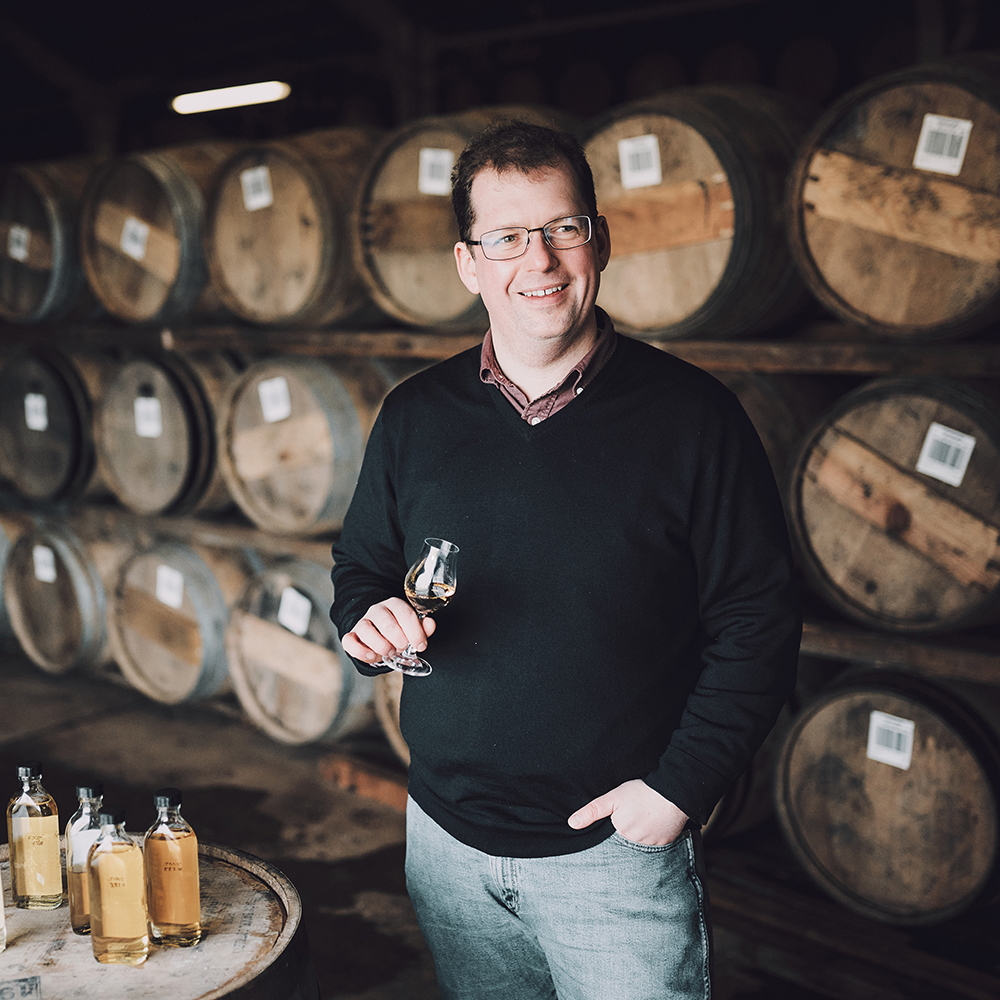
The Business of Blending
We asked Elixir’s no-nonsense head blender Oliver Chilton about “the art of blending” and he laughed. None of the flowery marketing speak for Ollie – he gave us the real low-down on why wonderful high-age blended malt whiskies come into being. And explains why they are greater than the sum of their parts...
“At Elixir, what we are looking for in any whisky,” says head blender Oliver Chilton, “is balance, and that’s especially true in blends. You don’t want lots of disparate elements; you want a harmonious beginning, middle and end. That’s not the same as perfect equilibrium – a balanced whisky can have a particular character, but that theme is consistent from the nose, onto the palate and through the finish. Blending allows the whisky maker a greater chance to achieve that balance.”
As any “knowledgeable amateur” who has ever attended a blending masterclass will attest, it is also easy to overcorrect when blending, like a car skidding on ice and bouncing from hedgerow to hedgerow. That’s why experts, such as the retired Johnnie Walker master blender and hero of nominative determinism, Jim Beveridge, are so revered. And, although modesty forbids, Oliver Chilton is one of the best (as **************medals confirms).
In the latest journey on Elixir’s Whisky Trail, we are in Scotland, but not one location at a time... We have a 40-year-old blended malt and a 16-year-old Islay blended malt. One was put together by a legendary blender from a major distillery group, but that’s enough about Ollie; the other was made for a famous blended whisky brand. And that is where the seldom told story of blended malts comes in...
Ollie explains: “Often these are component blends to be blended further with other parcels and with grain whisky. The big companies will often plan special projects, limited-edition blends with 2,000 or so bottles. And so, the master blender will vat a number of malts to age further before creating the final blend. But, the way the business works, there is often overvatting. You’ll blend more than 2,000 bottles-worth just in case there is some unexpected loss of liquid. If you order 2,000 specially designed bottles and can’t fill them, that’s a waste of bottles. But too much whisky is not a problem – you simply age it for longer, maybe vat it with another parcel, put it into more neutral wood and save it for a future project.”
Or they may sell it to an independent bottler such as Elixir. “In this case, we bought the parcel of what was then a 36-year-old blended malt in 2021. And we have a record of its journey. The youngest whisky in the blend was distilled on 25 March 1985, and the last time some of the liquid from this parcel was used was in 2019, a couple of years before we bought it.”
So what is the decision-making process when Sukhinder and Ollie are, first, purchasing a long-aged blended malt, and then, deciding when to bottle it? First, there is that defining Elixir philosophy of balance and harmony. And second, particularly when acquiring a parcel that has been maturing for a long time, does it tell a story?
Ollie says, “We’re interested in whisky that expresses the history of a particularly interesting period in whisky production. This blended malt has a big, waxy density to it. It feels like an old-fashioned whisky. You can tell it's had oxygen on it over time but doesn’t feel overaged; it's a good drinker. It is very much of its time – the 1980s.”
As for when to bottle it, Ollie says, “We are constantly monitoring the progress of each parcel. You don’t want it to overage just to reach an impressive number. It’s at 46% ABV now and the balance is just right, so it’s time to capture that.”
In the case of the 16-year-old blended malt from Islay distilleries, Ollie does not have to speculate what the project was that the blender overvatted for, because he was the blender. Elixir’s Elements of Islay blended malts are designed to prove that peated whiskies, for which the Hebridean island is famous, offer a wealth of variety.
“Often,” says Ollie, “those component blends I mentioned have a particular characteristic – a smoky component, a sherried component, a meaty component etc – and then those are, in turn, blended together in harmony. For Elements of Islay, I create similar component blends but we release them without further blending to emphasise a specific character.”
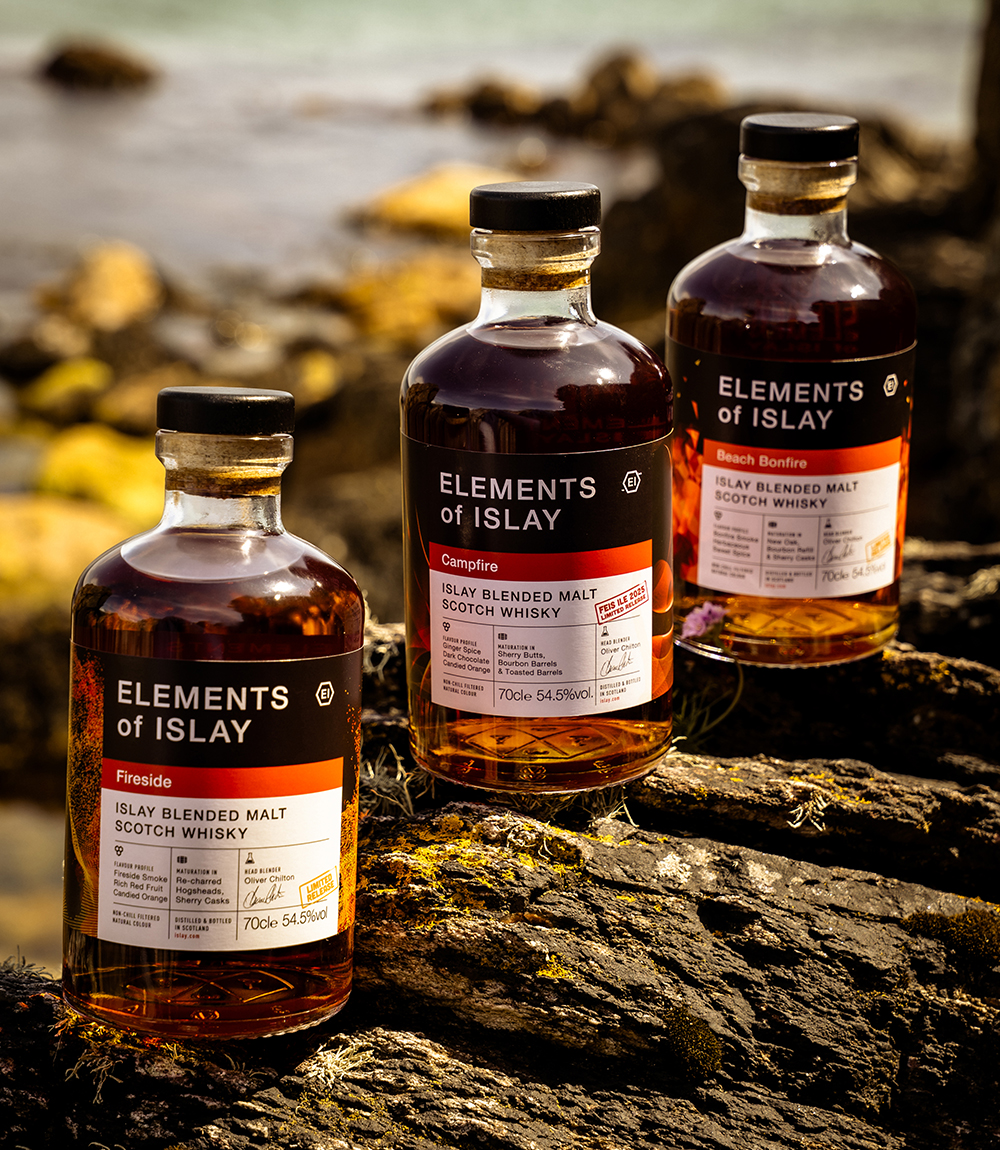
For example, Elements of Islay has had “Campfire”, “Fireside” and “Beach Bonfire” expressions – all with subtly different smoke profiles. “On the one hand,” says Ollie, “you have the phenolic, medicinal ashy character of Laphroaig; and contrast that with Caol Ila, which is fresher, cleaner and citrus-led, and its smoky profile is closer to coal smoke.”
The wood has an effect of course and Ollie created this blended malt in order to show off the effect of sherry on peated whiskies. This was vatted in first-fill oloroso butts Elixir sourced from a Jerez bodega which builds its casks from a mix of American and European oak. “The tannic effect is like a stewed tea – lapsang souchong, particularly.
Most of the blend was bottled as an Elements of Islay release three years ago, but Ollie had some left over, as he mentioned before. So it returns with extra ageing for this special Whisky Trail release.
All thanks to overvatting!